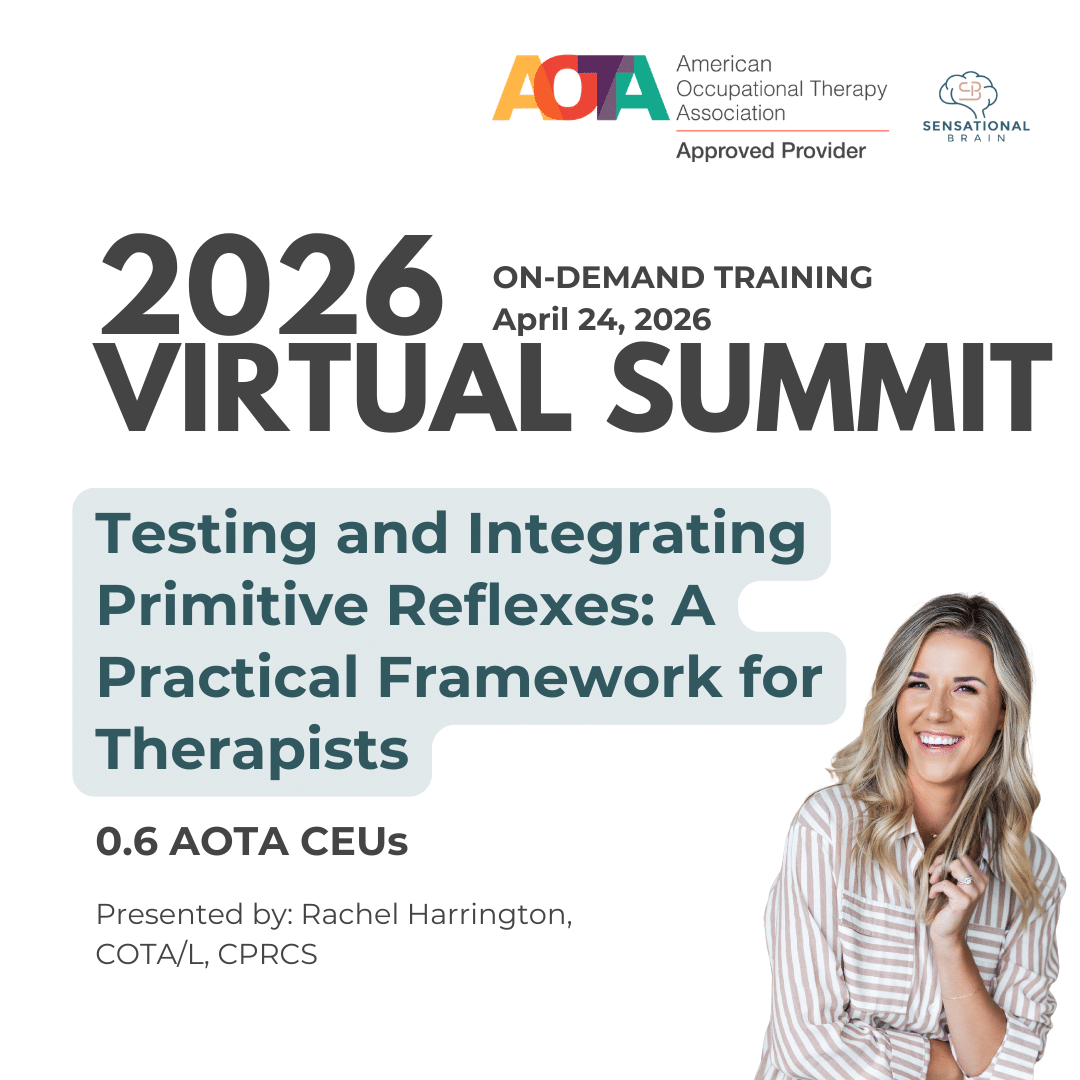
This 6-hour, hands-on training provides pediatric therapists, educators, and other pediatric professionals with the knowledge and practical skills needed to accurately screen, test, and integrate primitive reflexes. Participants will learn the neurological foundations of primitive reflexes, explore how reflex retention impacts sensory processing, motor development, emotional regulation, and learning, as well as learn best-practice methods for assessing reflexes in clinical and school settings.
Through live demonstrations, guided practice, and structured lab sessions, attendees will screen and test key reflexes including Moro, Fear Paralysis, ATNR, STNR, TLR, Landau, Spinal Galant, Palmar, and others. Participants will learn how to identify observable patterns of reflex retention and interpret these patterns to guide intervention.
The training also provides evidence-based reflex integration strategies, including rhythmic movements, functional play-based activities, proprioceptive strategies, ocular motor activities, motor movements, and home programming. Practical tools are provided to help therapists design efficient, individualized reflex integration routines suitable for clinic, school, and home environments.
Participants will leave confident and prepared to test for retained primitive reflexes and apply reflex integration strategies to support improved regulation, motor coordination, attention, and functional participation in children.
 |
Sensational Brain LLC is an AOTA Approved Provider of professional development (#8215). PD activity approval ID# 15882. This distance learning, independent activity is offered at 0.6 CEUs, Introductory level, OT Delivery Service, Foundational Knowledge. The assignment of AOTA CEUs does not imply endorsement of specific course content, products, or clinical procedures by AOTA or indicate AOTA approval of a certification or other professional recognition. |

Rachel Harrington, COTA/L, CPRCS, is a pediatric occupational therapy assistant, passionate about sensory integration, primitive reflexes, and early intervention. In October 2020, Rachel took over Sensational Brain, previously owned by Gwen Wild, MOT, OTR/L, in which she has rebranded and expanded into new courses, products, and more!
In addition to Sensational Brain, Rachel founded The Sensory Project, which shares simple sensory strategies and tips and handmade sensory tools on Etsy. She works part-time with Harkla to create sensory-related content for parents and therapists through a podcast, courses, and more.
Rachel is passionate about sharing her knowledge of sensory integration by participating in speaking engagements with nonprofit organizations, schools, childcare centers, and community events to increase early identification of sensory processing challenges.
Rachel lives in Boise, Idaho, with her husband, two young children and golden retriever, where they are always hiking, exploring or spending time with family.