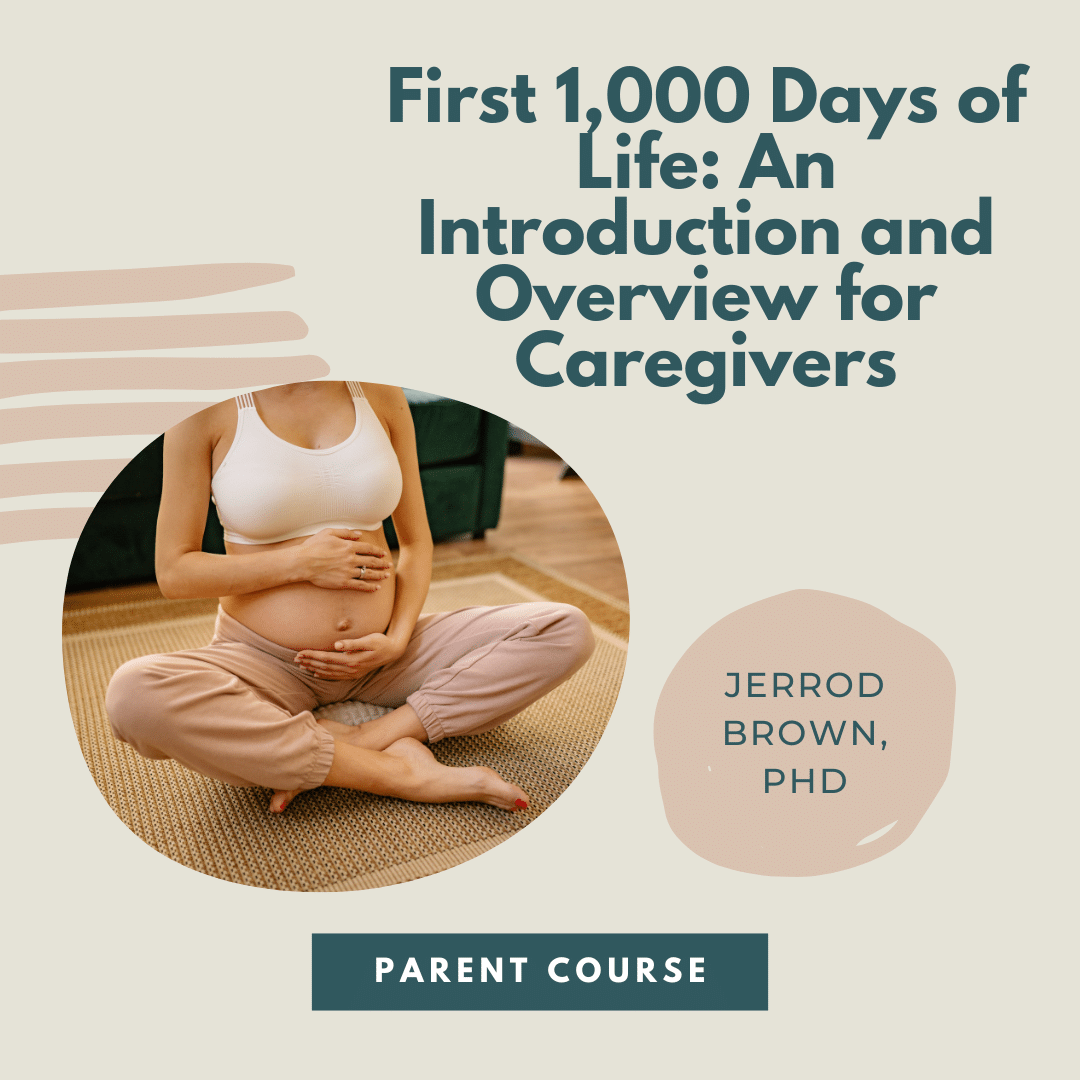
The first 1,000 days refers to a child’s life from day one of conception until the age of 2. This is a unique period of opportunity when the foundations of ideal neurodevelopment, growth, and health are established. Problematic and traumatic experiences during the first 1,000 days can have a life-long effect on their health and well-being. Targeted interventions during this period may play a vital role in reducing problematic behavioral, emotional, psychological, social, cognitive, and physical health outcomes throughout the lifespan. This training introduces participants to research on the first 1,000 days of life, examines challenges and experiences that may occur during this critical stage of development, and explores practical tips and strategies caregivers can implement to promote healthy childhood development throughout the first 1,000 days of life.
Jerrod Brown, PhD, MA, MS, MS, MS, MS, MS, is a professor, trainer, researcher, and consultant with multiple years of experience teaching collegiate courses. Jerrod is also the founder and CEO of the American Institute for the Advancement of Forensic Studies (AIAFS) and founder and co-editor-in-chief of Forensic Scholars Today. Jerrod has also provided consultation services to a number of caregivers, professionals, and organizations pertaining to topics related to autism spectrum disorder (ASD), fetal alcohol spectrum disorder (FASD), confabulation, suggestibility, trauma and other life adversities, alexithymia, executive dysfunction, criminal recidivism, traumatic brain injury (TBI), and youth firesetting. Jerrod has completed six separate master’s degree programs and holds graduate certificates in Applied Pediatric Nutrition, Medical Biochemistry, Exercise Prescription, Neuroscience and the Law, Neuropsychology, Autism Spectrum Disorder (ASD), Dyslexia, Other Health Disabilities (OHD), and Traumatic-Brain Injuries (TBI). In 2021, Jerrod completed a post-doctoral certificate in Leadership and Organizational Strategy from Walden University and a Professional Certificate in Forensic Psychology from San Diego State University Global Campus. In 2023, Jerrod completed a certificate in diabetes care and education from Central Arizona College. Jerrod has also conducted over 300 workshops, webinars, and on-demand trainings for various organizations and professional and student audiences. Jerrod has published several articles and book chapters, and recently, co-edited the book Forensic Mental Health: A Source Guide for Professionals (Brown & Weinkauf, 2018) with Erv Weinkauf. Jerrod has also been quoted in various magazines, newspapers, and other professional outlets. Jerrod is also regularly featured on several national and international podcast programs.